
Jenny Solitaire® - Card Games
Oakever GamesCard
4.76.43K Reviews
- Version
- 1.53.0
- Installs
- 5.00M
- Age Rating
- Everyone
Screenshots
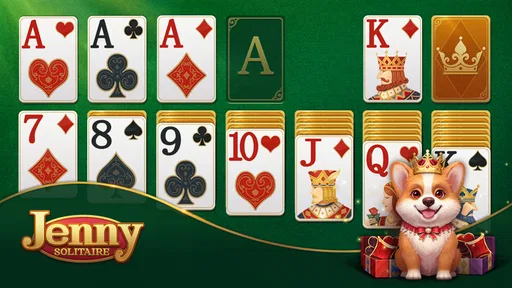
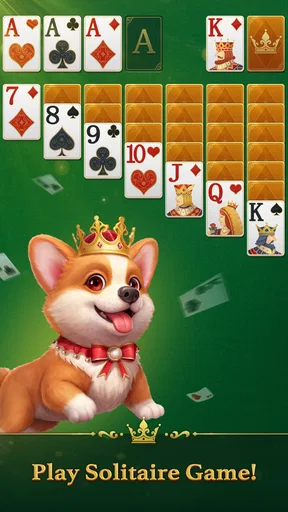
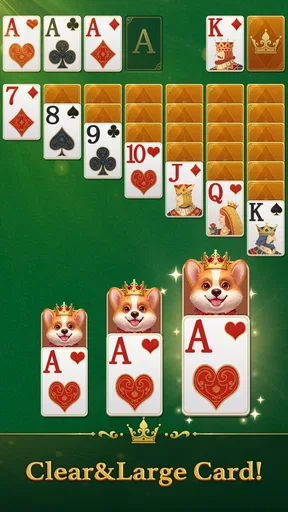


Our Review of Jenny Solitaire® - Card Games
 Analysis by Appyee
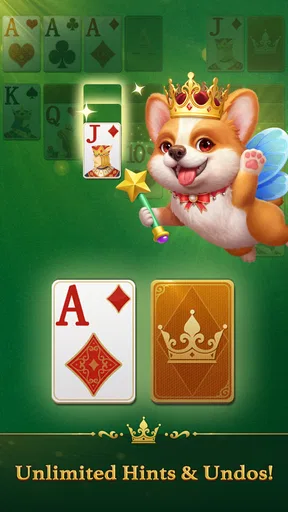
I enjoy solitaire most when it gives me a quiet few minutes without turning a simple card layout into a complicated project. Jenny Solitaire® takes that familiar idea and wraps it in a cheerful royal setting with Jenny the corgi nearby. After spending time with it, I found a game that is easy to pick up, pleasant for short sessions, and more focused on relaxation than dramatic competition.
That simplicity is the main reason I would recommend it to someone who wants a straightforward card game on a phone or tablet. It is free to start, rated for Everyone, and developed by Oakever Games. The game has reached over five million installs and holds a 4.7 average from around 277 thousand ratings, which suggests that its approachable style has found a substantial audience.
How the solitaire experience feels in everyday use
I focus on what makes this version of solitaire comfortable to return to: its familiar card play, gentle pace, and Jenny’s cheerful presence. That combination suits brief breaks particularly well, though the simple format still asks you to enjoy repetition. From there, it is worth considering how the game holds up when a quick round turns into a longer session.
A familiar format with a softer personality
The core appeal is recognizable immediately: you play classic solitaire while the game supplies a more decorative atmosphere than a plain digital deck. The royal presentation and corgi companion give the experience a little identity without changing what makes solitaire enjoyable. I never felt that I needed to learn a large rulebook before beginning. If you already know the usual solitaire flow, you can settle in quickly; if you do not, the basic structure is still approachable.
I found the game especially suitable for those small gaps in the day when I want something interactive but not demanding. It works well as a short break between tasks, a quiet activity before bed, or something to play while waiting. The important distinction is that it does not need to become your main hobby to be useful. A single session can feel complete, which is valuable for anyone who dislikes games that constantly ask for a long commitment.
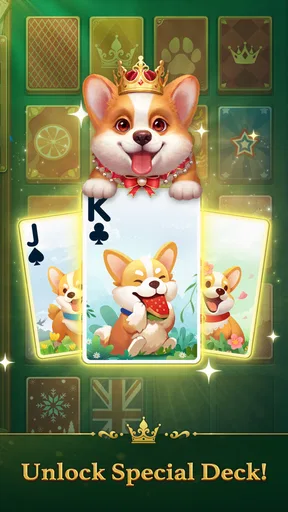
The visual theme also makes it more inviting than an entirely functional solitaire app. Jenny gives the presentation a friendly touch, while the royal atmosphere makes the ordinary card table feel slightly more like a themed room. That will not matter to every player, but it helps the game avoid feeling like a spreadsheet with cards.
What I would do during a normal day
Imagine having ten minutes before leaving for an appointment. I would open the game, play one layout, and stop when the time came rather than worrying about losing a large amount of progress. That makes it a good companion for fragmented schedules. It is also a reasonable choice for someone who wants a screen activity that is calmer than an action game and less socially demanding than a multiplayer title.
For a more focused session, I would use it as a mental reset after work. Solitaire asks me to scan the available cards, notice which move opens another possibility, and avoid spending every available option immediately. Even when the decisions are familiar, that small amount of attention can be satisfying. The game is not trying to replace a puzzle collection, but it gives the classic format enough atmosphere to make repeated rounds more appealing.
One useful habit is to pause before making an obvious move. In solitaire, the first available move is not always the best one, especially when moving a card could hide or reveal an important option. I found that treating each round as a sequence of small choices made the game feel more thoughtful without making it stressful. This is a simple tip, but it helps prevent the experience from becoming automatic tapping.
Progress without assuming too much
Solitaire players often want to know whether a game is purely casual or whether it pushes them toward a longer progression loop. My experience with Jenny Solitaire® is that its strongest identity remains the individual round. The pleasure comes from arranging cards, spotting opportunities, and completing a layout rather than from needing a complicated character-building system.
That can be a strength for players who want clarity. You can open the game with a particular mood in mind: play casually, concentrate on a difficult arrangement, or simply enjoy the setting. It is less suitable for someone who needs a deep campaign, a large collection of strategic systems, or constant new objectives to stay interested.
I also think this format is better for people who prefer self-paced progress. There is no need to coordinate with another player, wait for a match, or maintain a daily social routine. The trade-off is that the game may feel repetitive sooner if classic solitaire itself is not enough to hold your attention. The corgi and royal theme add personality, but they cannot completely change the underlying card structure.
Spending, pressure, and the free starting point
The game is free to download, with in-app purchases listed from $0.99 to $49.99 per item. That is the spending context I would keep in mind before installing it. The broad range means a cautious player should treat optional purchases as something to review carefully rather than assuming every part of the experience is equally cost-free.
I do not see a reason to spend money simply to understand whether the basic solitaire format suits you. I would first play it at no cost, decide whether the presentation and rhythm work for me, and only then consider any purchase that clearly improves my own experience. This is a practical approach for a casual game because the main question is not whether you can begin, but whether you enjoy returning to it.
For parents or anyone managing a device shared with children, the Everyone content rating is reassuring from an age-classification perspective, but I would still use the device’s purchase controls. The presence of optional purchases means a child should not automatically have unrestricted access to payment methods. That is not a criticism unique to this game; it is simply sensible housekeeping whenever a free game includes paid items.
The most important fairness question is whether spending is necessary to enjoy a round. I would not promise that every optional element is equally useful or that no player will feel tempted to buy something. What I can say is that the game is accessible as a free download, and my recommendation is to judge it first on its unpaid play. If the basic loop already feels repetitive, paying more is unlikely to solve that fundamental issue.
Does it feel competitive or pay-to-win?
Jenny Solitaire® is a poor fit for someone looking for a serious competitive ladder. Its appeal is personal play, not proving superiority over opponents. That changes how I evaluate fairness. In a head-to-head game, purchases might directly affect another player’s chances; in a solo solitaire experience, the bigger concern is whether paid options create pressure or interrupt a relaxing session.
I would therefore approach it as a private pastime rather than a contest. There is no reason to compare your spending with anyone else’s, and the game does not need to become a test of financial advantage. If you want a fair competitive card game where every player uses the same resources, a dedicated multiplayer title with clearly defined rules would be a better choice.
For solitaire fans, fairness is more about decision-making than status. I prefer to feel that my result reflects the choices I made, not that I was pushed toward a purchase after an unlucky layout. When playing, I recommend noticing how often you are making a strategic decision versus simply responding to a prompt. That awareness helps you decide whether the game is offering satisfying play or merely encouraging continued tapping.
Another useful trade-off is convenience. A paid aid, if offered in the way the game presents its purchases, may save time or reduce frustration, but using assistance can also remove the satisfaction of solving a layout yourself. I would keep the first few sessions as clean as possible, learning the rhythm of the game before deciding whether convenience is worth more than the challenge.
Small techniques that make rounds more satisfying
My first practical tip is to avoid emptying a column too quickly unless you already know what you will place there. An open space can be valuable, but it is only useful when you have the right card to move into it. Thinking one or two moves ahead makes the familiar format more engaging and reduces the feeling that the result is determined by random tapping.
My second tip is to prioritize moves that reveal hidden cards when you have a choice. A move that merely rearranges visible cards may look productive, but uncovering another card usually gives you more information. This is the kind of small decision that separates a thoughtful round from a routine one, and it gives the game more depth than its friendly presentation might suggest.
My third tip is to stop after a frustrating streak instead of immediately chasing a better result. Because the game is designed for short sessions, there is little benefit in turning a relaxing break into a stubborn contest with the screen. Closing it and returning later can be the better strategy, particularly for players who use solitaire to unwind rather than to maximize every outcome.
I also recommend checking your own reason for opening it. If you want to calm down, choose a slower pace and resist rushing through obvious moves. If you want a quick distraction, accept that a short round may be enough. The same game can serve both purposes, but it works better when you decide what you want from the session before the cards start competing for your attention.
Who should install it, and who should skip it?
I would recommend this game to people who already like classic solitaire, players who want a welcoming visual theme, and anyone looking for a free card game that can be played in brief bursts. It is also a sensible option for users who prefer solo activities and do not want chat, matchmaking, or the pressure of keeping up with a group.
The corgi theme is a particularly good match for players who find plain card apps dull. It gives the familiar rules a warmer personality without requiring you to commit to a large fantasy world. If you enjoy light presentation and simple routines, that balance may be exactly what you want.
I would skip it if your priority is a deep strategic card game with a changing meta, a strong multiplayer community, or a substantial story. I would also be cautious if you are easily drawn into optional purchases and mainly want a completely uninterrupted, one-time-paid experience. In that case, a premium solitaire app with a clear upfront model may suit you better, even if it has less decoration.
Players who dislike repetition should test the free experience briefly and honestly. The royal setting can make the first impression more distinctive, but the central activity remains solitaire. No theme can change that. If arranging the same broad type of card layout already feels tiring, this will probably not become more compelling simply because Jenny is present.
Device expectations and practical details
The game supports devices running Android 7.1 or later, and its current version is 1.53.0. That makes it relevant to people using older compatible Android hardware, although the actual comfort of play will still depend on screen size, responsiveness, and how easily you can distinguish the cards.
A larger phone or tablet can make card reading more comfortable, especially during a longer session. On a smaller screen, I would pay attention to whether the card faces and controls remain easy to tap without accidental moves. Solitaire does not demand the reflexes of an action game, but precision still matters when several cards are close together.
The game was released on July 3, 2023, and the developer is Oakever Games. Those details are useful when checking that you have found the intended title, particularly because solitaire apps often use similar names and familiar imagery. I would still look at the version shown on your own device before troubleshooting, since app behavior can change as updates arrive.
One question many people have is whether they need to be experienced with solitaire before starting. My answer is no. The game’s value comes partly from being immediately understandable. Beginners can learn by trying legal moves, while experienced players can concentrate on planning rather than instruction. If you are completely new, take your first rounds slowly and focus on what each move reveals.
How it compares with plain solitaire and other card games
Compared with a basic solitaire utility, this game offers more personality. A plain app may be preferable if you want the smallest possible interface, rapid loading, or no themed atmosphere. Jenny Solitaire® is better when the surrounding presentation affects whether you feel like opening the game again.
Compared with a multiplayer card game, it is calmer and more private. You do not need to wait for an opponent or worry about another person’s pace. The downside is that it lacks the unpredictability and social tension that make competitive card games exciting. Your enjoyment depends much more on whether you like the solitaire loop itself.
Compared with a premium app, the free entry is convenient, but the listed purchase range deserves attention. A one-time purchase can be easier to understand for people who want a fixed cost, while a free game allows you to try the experience before deciding whether it belongs on your device. Neither model is automatically better; the right choice depends on whether you value experimentation or spending certainty.
Compared with a broader puzzle game, this title is narrower but more relaxing. You will not find the variety of mechanics that comes from a large puzzle collection, yet that narrow focus is precisely why it works well for a short mental break. I would choose it when I want familiarity with a little charm, not when I want constant novelty.
What I would check before committing to it
I would begin by playing several free rounds at different times of day. That tells you whether the design remains comfortable when you are relaxed, distracted, or trying to finish quickly. It also reveals whether the visual theme genuinely improves the experience for you or merely makes the first launch memorable.
Next, I would decide on a personal spending boundary before looking at optional items. Since purchases range from $0.99 to $49.99 per item, making that decision in advance is more reliable than choosing while frustrated by a difficult round. If you never feel the need to buy anything, that is useful information about how well the unpaid experience serves you.
I would also ask whether I want a game that rewards repeated familiarity. Solitaire becomes more enjoyable when you notice patterns and improve your choices, but it does not provide the same variety as a constantly changing genre. Knowing that trade-off prevents disappointment later.
Finally, I would consider who else might use the device. The Everyone rating makes the game broadly accessible, while the presence of in-app purchases means purchase protections remain worthwhile on shared devices. That combination is easy to manage, but it should not be ignored simply because the game looks gentle.
My trust verdict after weighing the trade-offs
My overall view is positive, with a clear limit: this is a themed casual solitaire game, not a complete answer for every card-game player. I like its friendly identity, its easy entry, and its suitability for short sessions. The free starting point makes it simple to test, and the strong audience response gives it credibility as a popular choice without changing the fact that personal taste matters more than a rating.
On spending, I would remain deliberate rather than suspicious. The listed purchases run from $0.99 to $49.99 per item, so I would not treat every optional offer as automatically worthwhile. I would play first, set a limit, and spend only if a paid convenience genuinely improves my enjoyment. That approach keeps the decision in my hands instead of letting a difficult round make it for me.
On fairness, I see the game primarily as a solo experience, which means the important test is whether it remains enjoyable without turning optional purchases into a requirement. I would not choose it for competitive integrity because competition is not its main purpose. I would choose it for a calm, familiar card routine with a corgi and royal styling.
There are also practical unknowns that I would leave for each player to judge directly, such as how the current presentation feels on a particular device and whether the available optional elements match personal expectations. Rather than guessing, I think the best method is to try the free version, observe the rhythm of play, and make a spending decision only after the novelty has settled.
My recommendation is to try Jenny Solitaire® if you want classic solitaire with a warmer, more decorative personality. It is a good fit for quiet breaks, beginners, and experienced players who enjoy returning to a familiar format. If you need deep variety, intense competition, or a clearly fixed one-time cost, another card app may serve you better. For everyone else, it is an easygoing choice that earns its place by making a simple game feel pleasant to revisit.
Verdict
Strengths of Jenny Solitaire® - Card Games
- Simple rules make it easy for beginners to start playing.
- Short rounds are convenient for quick breaks or casual sessions.
- Solitaire offers a relaxing, low-pressure single-player experience.
- Familiar card gameplay works well for players of many ages.
- Progress can be enjoyed without needing multiplayer coordination.
Limitations of Jenny Solitaire® - Card Games
- Gameplay may feel repetitive after extended sessions.
- Some features may require an internet connection or extra permissions.
- Ads can interrupt play, depending on the version and settings.
- Limited social interaction may disappoint competitive players.
- Small card details could be harder to read on compact screens.
Other Releases by Oakever Games
View All


Similar Picks in This Category
View All
Solitaire - Classic Card Games
MobilityWare4.6

UNO!™
Mattel163 Limited4.3

Spider Solitaire: Card Games
MobilityWare4.6

Solitaire.com - Classic Cards
Tripledot Studios Limited4.7

Plants vs. Zombies™ Heroes
ELECTRONIC ARTS4.1

Hearthstone
Blizzard Entertainment, Inc.4.1
Frequently Asked Questions
What is Jenny Solitaire® - Card Games?
Jenny Solitaire® - Card Games is a casual card game focused on classic solitaire-style gameplay. It is designed for short sessions as well as longer relaxing play, with familiar rules, touch controls, and a simple interface. Players can work through card layouts, improve their strategy, and enjoy a traditional single-player experience on a mobile device.
Is Jenny Solitaire® - Card Games free to download and play?
The game can generally be downloaded without an upfront purchase, although the exact availability of free features may depend on the Android or iOS version and the developer’s current policies. Some optional items, advertisements, or premium features may be included. Before installing, check the store listing for in-app purchase details, supported devices, and any restrictions in your region.
Does Jenny Solitaire® - Card Games require an internet connection?
Solitaire games are typically suitable for offline play, which makes Jenny Solitaire® convenient for travel, waiting rooms, or places with limited connectivity. However, certain functions—such as advertisements, analytics, cloud synchronization, updates, or promotional content—may require internet access. It is best to launch the game once online and test which features remain available when your device is offline.
Is Jenny Solitaire® - Card Games suitable for beginners?
Yes. The game is based on familiar solitaire mechanics, so beginners can usually understand the objective after a few rounds. Touch-based card movement and straightforward layouts make it accessible to casual players, while choosing when to reveal cards and which moves to prioritize provides enough strategy to keep experienced solitaire fans interested.
What should I check before downloading Jenny Solitaire® - Card Games?
Before downloading, review the official store page for device compatibility, required operating-system version, app size, privacy information, advertising, and in-app purchases. You should also confirm whether the game includes features you value, such as offline access, statistics, hints, undo options, or multiple solitaire variations. Availability and specific features can differ between Android and iOS.
Play our best games!


